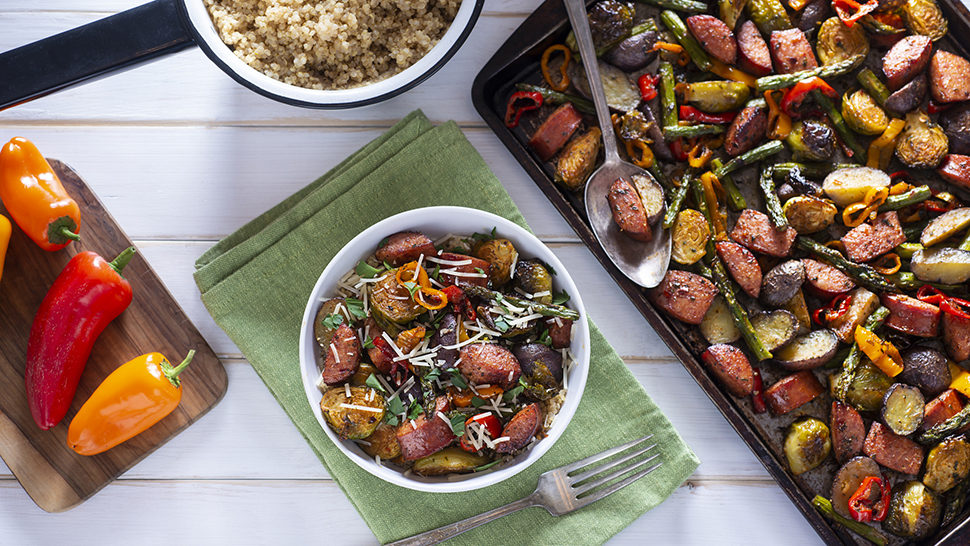
We’ve all been there — you don’t want to cook, but you don’t want to (or maybe even can’t) go out to eat. Making nourishing and satisfying meals can be as easy as filling a sheet pan and then sitting back and relaxing. This straightforward technique cooks plants and protein on a single pan and offers maximum flexibility and potential leftovers. (If you want to serve your sheet pan supper with a side of brown rice, quinoa, or other whole grain, get that started separately.)
5 Steps to a Successful Sheet Pan Supper
- Preheat and prep your pans. Preheat the oven to 400 degrees F. Line 1-2 sheet pans with parchment paper or foil.
- Choose your vegetables. Any vegetables will do but aim for a mix of starchy (sweet potatoes, squash, root vegetables) and non-starchy (broccoli, peppers, onions, kale, etc.). If you’re picking multiple vegetables that might cook at different rates, cut them into same-sized pieces and segregate them for easy removal.
- Add protein. Choose what you like – tofu, tempeh, poultry, fish, pork, or beef will all work here. Plan for 2-4 ounces per serving, and keep in mind that some proteins and thicker cuts will need longer to reach a safe temperature.
- Toss with flavor and fat, then roast until golden brown. Drizzle everything with oil and season with salt and pepper. Want to add herbs and spices, smashed garlic cloves, lemon slices, or fresh chiles? Go for it! Don’t stress on this one, just use what you have and what you like. Toss to coat, then arrange in a single layer with plenty of space between each item. Roast in the oven until the vegetables are golden brown and the protein is cooked through, checking every 10 minutes and tossing each time. Remove items as they finish cooking.
- Serve it up. Plate as-is, or serve over your favorite whole grain like quinoa, farro, or brown rice.
Need recipe inspiration? Check out a few of our favorite sheet-pan dinner recipes. Each one is adaptable, so think of them as a template.